The “January Rush” is officially over, and for most, the initial surge of motivation has hit a wall of biological friction. If you have struggled or failed your resolutions, it isn’t a character flaw; it is a failure of your current physiological and neurological programming.
As an anti-aging researcher and founder of X Gym, I advocate for the Minimum Effective Dose. You do not need more hours in the gym; you need better signals sent to your cells and synapses, including those in your brain.
Here is how to reboot your year using the seven most effective biohacking tips and tricks.
1. Optimize the Minimum Effective Dose (MED)
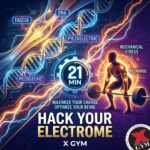
Have you ever noticed how professional bodybuilders and strength athletes look older than they are? This is because high-volume training is the enemy of longevity. To trigger mitochondrial biogenesis and fat loss, you only need 21 minutes of high-intensity functional training twice a week. This “MED” approach prevents the Central Nervous System (CNS) burnout that causes most people to quit by February.
I am asked about MED often on podcasts, and what I tell listeners is to start with so little that you would feel silly not doing it. And then commit to it every day. This might mean one pushup or walking around the outside of your house. Then, when that habit is established, and it becomes an automatic daily routine, you can increase the number of push-ups or distance of walking gradually, so it still remains too easy. It’s discipline and habits that are the most important parts of getting in shape, and this establishes both.
2. Prioritize Myofibrillar Density
Forget “bulking.” To achieve a toned, defined physique, focus on the density of the muscle fibers. Use Time Under Tension (TUT) and slow eccentrics (the lowering phase) until you reach Complete Muscle Fatigue (CMF), where you can’t do another rep. This creates the necessary stimulus without the muscular damage and inflammatory joint stress of traditional heavy lifting.
3. Anchor Your Circadian Biology
Recovery is vital to progress, and it is a hormonal game governed by light. View 10,000 lux of sunlight within 30 minutes of waking. If you live in a latitude where it is still dark when you wake up, a full-spectrum light will still help. This sets your cortisol pulse for the day and ensures your growth hormone peaks during deep sleep—the peak time your body burns fat and repairs muscle. Another helpful habit is to avoid screens at least 1 hour before sleep, to reduce the blue light that messes up your rhythms and cycles.
4. Leverage Metabolic Flexibility
Stop “dieting” and start timing. Ensure you hit 30-50g of high-quality protein in your first meal of the day to activate the mTOR pathway, which signals the body to build and preserve muscle. Another helpful pattern is to try intermittent fasting.
5. Utilize HRV for Data-Driven Recovery
Do not train based on feelings. You will rarely “feel” like going to the gym, especially after your initial New Year’s resolution motivation has waned. Use a Heart Rate Variability (HRV) monitor to gauge your autonomic nervous system. If your HRV is low, your body is in a sympathetic “fight or flight” state. Pushing through a workout in this state is catabolic and counterproductive. If you’re getting good recovery, sleep, nutrition, and taking care of yourself, your HRV will be high enough to train most of the time, but if it’s down more often than not, it’s a Biohackers tool to help you dial in your other health habits.
6. Neurological Identity Shifting
The brain resists changes to the ego. If you say you are “trying” to get fit, your brain treats it as an optional chore. Shift your language to “I am an athlete” or “I am a biohacker.” This shifts the behavior from the prefrontal cortex (willpower) to the basal ganglia (identity-driven habit). For custom brain, rewiring, tips, and tricks, take the Brain Type Test.
7. Dopamine Splitting and Micro-Wins
Resolution failure often happens because the reward (weight loss) is too far away. Hack your reward system by celebrating micro-wins, like simply arriving at the gym. then do a victory pose and say, “I’m awesome!” This might seem too simple, or even silly, but it won’t be to your subconscious brain, which operates at about the level of a three year-old, and is the part of your brain that is in charge of your reward system and habit formation. Small rewards provide the dopamine drip required to maintain the neural pathways of a new habit until the physical results become self-sustaining.
Conclusion: The “Never Miss Twice” Rule
If you have already fallen off the wagon, stop the cycle of guilt. A single missed session is a data point; two is a trend. Use these seven tips to bypass the typical “resolution” trap and start training for longevity rather than just a date on the calendar.
References
Latest Posts