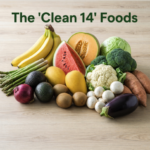
The Clean 14: Non-organic foods that are typically low-pesticide and low-Glyphosate
For years, the Environmental Working Group’s Clean Fifteen has been the go-to reference for people who want to reduce pesticide exposure without buying everything organic. It’s a useful starting point, but it has limits. Some items on the list still carry meaningful glyphosate risk, and a couple have commercially available GMO versions.
So I filtered the Clean Fifteen (and a few strong contenders from the middle of EWG’s full ranking) for three things:
- Consistently low pesticide residues in USDA testing
- Minimal practical glyphosate exposure
- No commercially available GMO versions in the U.S. market
The result is a tighter, more practical list: the Clean 14.
These 14 fruits and vegetables currently check all three boxes. They’re not zero-residue or zero-glyphosate (trace amounts from nearby crop drift are always possible), but they represent some of the lowest-risk conventional produce available. While it is always best to buy organic, if you absolutely can’t, these 14 foods will be lower risk.
The Clean 14
1. Avocados
Thick skin does most of the work. Residues rarely make it to the flesh you eat, and glyphosate use on avocados is limited.
2. Bananas
The peel is discarded, which keeps residues low. No GMO bananas are commercially available in the U.S.
3. Mangoes
Another thick-skinned tropical fruit. Testing consistently shows low residues, and glyphosate isn’t a significant concern.
4. Watermelon
The thick rind protects the edible portion. Seedless varieties are hybrids, not GMOs.
5. Kiwi
The fuzzy skin is typically peeled or wiped, and residues remain low in testing.
6. Asparagus
Harvested young and over a short window, which limits pesticide applications. Most samples test clean.
7. Cabbage
Outer leaves act as a natural barrier and are usually removed. Cruciferous vegetables also have some natural pest resistance.
8. Cauliflower
Similar advantages to cabbage. Low residue levels and no GMO versions on the market.
9. Mushrooms
Grown indoors under controlled conditions. Conventional mushrooms rarely show significant pesticide residues.
10. Broccoli
Sits just outside the official Clean Fifteen but still tests relatively low. Outer leaves and florets limit residue exposure.
11. Cantaloupe
The netted rind is removed before eating. Residues are generally low compared with thinner-skinned fruits.
12. Sweet potatoes
The skin provides protection, and residues tend to be modest. No commercial GMO sweet potatoes exist in the U.S.
13. Eggplant
Low residue profile in testing. While a Bt eggplant exists in some countries, it is not commercially available in the U.S.
14. Onions
Outer layers are discarded during prep. Sulfur compounds also give onions some natural pest resistance, reducing the need for heavy spraying.
Why This List Is Useful
The Clean 14 isn’t about perfection. It’s about practical risk reduction. These foods share a few common advantages:
- Many have protective peels, rinds, or outer leaves that are removed before eating.
- Glyphosate is not routinely used as a pre-harvest desiccant on these crops the way it is on oats, wheat, and many legumes.
- None of them have widely available GMO versions in the U.S. (the only close call was pink pineapple, which is why it was left off this list).
If you buy organic versions of these, you further reduce both conventional pesticide residues and any potential glyphosate exposure. But even conventionally grown, they are among the lower-risk choices in the produce aisle.
How to Use the Clean 14
You don’t need to restrict yourself to only these 14. The goal is simply to make the majority of your conventional produce purchases come from this group when organic isn’t available. The Clean 14 isn’t an official ranking from any organization. It’s a filtered, practical list based on current residue data, glyphosate use patterns, and the actual commercial availability of GMOs. As testing methods and farming practices evolve, the list may shift. For now (as of November 2026), these 14 represent some of the cleaner options available in conventional produce.
Latest Posts