The Master Structural Scaffold: Laminin and Extracellular Matrix Preservation
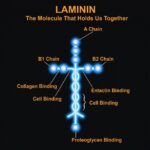
In the architecture of human biology, few macromolecules play a role as fundamental to structural integrity as laminin. Often referred to as the cellular glue that holds the body together, laminins are high-molecular-weight extracellular matrix glycoproteins that form the structural foundation of every basement membrane underlying epithelial and endothelial tissues.
Structural Anatomy and Core Functions
Structurally, laminins are heterotrimers composed of three distinct polypeptide chains—alpha, beta, and gamma—assembled into a characteristic cross-like shape. This geometry allows them to self-assemble into intricate mesh networks that interact directly with type IV collagen, nidogen, and proteoglycans.
Beyond acting as mechanical scaffolding, laminins serve several critical physiological functions:
-
Cellular Anchoring: Laminins bind directly to cell surface receptors, predominantly integrins, as well as dystroglycans and syndecans, physically locking cells to their underlying extracellular matrix.
-
Signal Transduction: Receptor engagement transmits vital biochemical signals that dictate gene expression, cell polarization, proliferation, migration, and survival.
-
Organogenesis and Tissue Maintenance: During fetal development, laminins guide vital tissue patterning. In adult tissues, they maintain vascular stability, nerve regeneration pathways, and structural resilience.
Pathology of Degradation
When laminin networks degrade or experience genetic and environmental structural failure, the consequences are severe. Because basement membranes govern tissue compartmentalization and filtration, their breakdown precipitates rapid pathology:
-
Muscular Dystrophy: Mutations affecting the laminin alpha-2 chain (merosin) lead to structural failure in muscle basement membranes, resulting in congenital muscular dystrophy.
-
Skin Fragility: Defects in laminin-332 disrupt dermal-epidermal adhesion, causing blistering disorders such as epidermolysis bullosa.
-
Renal Filtration Failure: Degradation of laminins within the glomerular basement membrane compromises selective filtration, driving nephrotic syndrome and progressive kidney dysfunction.
-
Accelerated Tissue Aging: Chronic degradation driven by oxidative stress, enzymatic cleavage, and glycation leads to loss of skin elasticity, vascular stiffening, and compromised tissue repair capacity.
Strategies to Prevent Degradation and Support Matrix Integrity
Protecting the basement membrane requires a multi-faceted approach focused on optimizing synthesis, minimizing oxidative cleavage, and inhibiting matrix-degrading enzymes.
Lifestyle Interventions
-
Mechanotransduction via Continuous Tension: Utilizing slow, continuous-tension X Gym-style resistance training uniformly distributes mechanical load across structural matrices. This stimulates fibroblasts to synthesize foundational structural proteins and reinforce basement membrane architecture without triggering focal inflammatory micro-tears common to traditional training methods.
-
Circadian Autophagy Regulation: Implementing time-restricted feeding schedules (such as 16-hour fasting) activates cellular autophagy. This clears out damaged extracellular matrix components and dysfunctional structural proteins, facilitating efficient tissue remodeling.
-
Metabolic Stabilization: Chronic hyperglycemia drives the formation of advanced glycation end-products (AGEs), which cross-link and stiffen laminin and type IV collagen. Maintaining stable blood glucose via low-carbohydrate nutrition habits directly protects these structures from glycation damage.
Targeted Supplementation
-
Structural Amino Acids: Providing adequate dietary or supplemental glycine and proline ensures the raw building blocks required for the heterotrimeric folding of basement membrane proteins are readily available.
-
Vitamin C (L-Ascorbic Acid): Ascorbic acid acts as an essential enzymatic cofactor for prolyl and lysyl hydroxylase, the enzymes responsible for hydroxylating proline and lysine residues to enable proper cross-linking and structural stabilization.
-
Mitochondrial Support (Ubiquinol and PQQ): Mitochondrial dysfunction accelerates cellular senescence and increases reactive oxygen species production, which upregulates matrix metalloproteinases (MMPs). Combining CoQ10/ubiquinol with pyrroloquinoline quinone (PQQ) preserves fibroblast and endothelial bioenergetics.
-
Cellular Antioxidants (NAC and Taurine): N-Acetylcysteine and taurine support intracellular glutathione synthesis and cellular osmotic balance, mitigating oxidative stress that leads to the oxidative cleavage of laminin networks.
-
Matrix Metalloproteinase Inhibition (EGCG): Epigallocatechin gallate from green tea acts as a natural inhibitor of matrix metalloproteinases (specifically MMP-2 and MMP-9), protecting basement membrane laminins and collagens from excessive enzymatic breakdown.
It’s no wonder this molecule, discovered in 1979, which literally holds us together, has an easily recognizable, distinct shape, especially in light of the verse about Jesus Christ, written 2000 years ago: “He is before all things, and in him all things hold together.” Colossians 1:17. And 3000 years ago, King David wrote: “You created my inmost being; you knit me together in my mother’s womb.” Psalm 139:13
References
Latest Posts