Beyond the Wires: Why Your Brain Isn’t Running the Show (And How That Changes Everything)
Do you ever catch yourself saying, “My brain just loves this song,” or “Ugh, my brain’s fried after that meeting”? We toss around these phrases like confetti, but what if I told you they’re not just sloppy shorthand—they’re quietly selling you a lie? The lie that you are your brain. That you’re a squishy supercomputer churning out thoughts, decisions, and dreams on some cosmic assembly line.
Reality check: Your brain isn’t the boss—it’s more like the loyal sidekick, the hardware hustling behind the scenes so you can steal the spotlight. This isn’t some woo-woo philosophy; it’s backed by neurosurgeons who’ve spent decades cracking skulls open (literally) and staring into the void of consciousness.
Today, we’re ditching the “meat machine” myth and stepping into a freer, fiercer way of seeing yourself: as a being with a mind that’s vast, immaterial, and utterly unchained from neurons. Buckle up—your brainview is about to get an upgrade.
The Sneaky Metaphor That’s Short-Circuiting Your Self-View
Let’s start with the culprit: language. We say “the brain thinks,” as if that three-pound blob of Jell-O is plotting world domination while you nap. But hold on—brains don’t think. They pulse with electricity, shuffle memories like a chaotic librarian, and fire off signals to make your heart beat or your coffee mug lift. You think using your brain, just like you paint using a brush or drive using a car. Confuse the tool for the artist, and suddenly you’re diagnosing “brain glitches” for every bad mood or brilliant idea.
This mix-up is ancient, but it got turbocharged in the 1600s when René Descartes decided humans were basically fancy robots with a “ghost in the machine”—a soul awkwardly bolted onto the body. Fast-forward to today, and neuroscience is drowning in this myth. Researchers chase “the binding problem” (how the brain supposedly glues your senses into one seamless “you”), but it’s a wild goose chase born from bad poetry. As neurosurgeon Michael Egnor puts it, after decades elbow-deep in brains, “The mind is more than the brain.”
If we are just machines, why do we feel so… un-mechanical? That gut punch of moral outrage when you see injustice, or the quiet resolve to forgive when revenge would be easier? That’s not circuitry; that’s you, the mind, flexing powers that transcend grey matter. Enter the soul— the core “you” that infuses life into the body. It handles the brain’s grunt work (move, remember, emote) and the magic stuff (reason like a philosopher, choose like a rebel).
Materialism, that ironclad belief that everything boils down to atoms and algorithms, tries to cram the infinite into a shoebox. Spoiler: It doesn’t fit. Aristotle saw it centuries ago—humans aren’t artifacts cobbled from parts; we’re living wholes, pulsing with purpose.
Real Talk from the OR: Brains Behaving Badly (Or Not)
Okay, philosophy’s cool, but you want proof, not platitudes. Let’s raid the evidence locker—straight from the operating room, seizure wards, and even the edge of death.
First, the zap test. Egnor and his colleagues “map” brains during awake surgeries by tickling neurons with electrodes. Want to see a patient recite pi to 20 digits or debate ethics? Good luck. Those jolts spark arm waves, phantom smells, or a sudden laugh track—but never a theorem or a “eureka” on life’s meaning. Seizures? Same deal: Chaos of limbs flailing or emotions erupting, but zero “intellectual seizures.” If reason and free will were brain brew, we’d have folks solving Rubik’s Cubes mid-epilepsy. Instead? Crickets. These powers aren’t produced by the brain; they’re channeled through it, like water through a hose.
Then there are the plot twists: Patients who’ve lost huge chunks of brain real estate—up to two-thirds—and still crush it! College grads with hydrocephalus (fluid swelling that squishes tissue like a sponge), or kids with hydranencephaly (missing the brain’s “thinking cap” entirely) who chat, emote, and stay wide-eyed aware. If consciousness were a cortical app, these folks would be offline. Yet here they are, fully them. It’s like running a blockbuster movie on a flip phone—the software’s bigger than the silicon.
Don’t stop there—peek at conjoined twins Tatiana and Krista Hogan. They share a neural bridge, swapping sensations like “Ooh, I feel your tickle!” But personalities? Miles apart. One’s a tomboy artist, the other’s a bookish dreamer. Brain stimulators for Parkinson’s tweak tremors or moods, but they’ve never “uploaded” willpower or wit.
And near-death experiences? Oh boy. Take Pam Reynolds: Brain flatlined, skull sawed open, eyes taped shut during aneurysm surgery. She “floated” above, nailing details like the surgeon’s banter and the bone saw’s hum. She could even describe the instruments used in detail – stuff no dead brain could catch and eyes couldn’t see. She chatted with passed relatives (not the living ones in the room) and came back remade: Fearless, compassionate, and alive in a new way.
Materialists wave it off as “dying brain burps,” but that doesn’t cover the veridical visions (provably true out-of-body intel), the crystal clarity sans oxygen, or the lasting glow-up. It’s a mic-drop challenge: Explain that without invoking something beyond meat.
Rewiring Your Choices: From Robot to Rebel
So, what now? This isn’t just trivia—it’s a permission slip to live differently. Ditch “promissory materialism” (that tired “Science will figure it out eventually!” dodge) and own the gaps. Science thrives on poking holes, and materialism’s leaking like a sieve.
Daily life gets richer, too. Ever feel that tug-of-war—craving cake (body’s “sensitive appetite” yelling) versus sticking to your goals (mind’s “rational appetite” whispering discipline)? Benjamin Libet’s wild experiments clocked brain flickers before you consciously decide to wiggle a finger. But here’s the kicker: When you veto that urge—”Nah, not today”—no flicker. That’s free “won’t power,” pure and immaterial, your soul/mind hitting override on the hardware.
Even tech bends to this truth. Neuralink and brain-computer interfaces could be game-changers for paralysis or depression, dialing down the brain’s static so you can think more clearly and choose bolder with your mind. But they won’t birth a soul—they’re amps, not origins. We’re not hacking the human OS; we’re tuning the radio so the real signal shines.
The Spark That Outlives the Storm
Here’s the beauty: Seeing mind and brain as distinct doesn’t make you less scientific—it makes you more human. You’re not a puppet jerked by synapses; you’re the puppeteer, eternal and electric. Reason isn’t reducible to reactions; free will isn’t an illusion cooked up by chemicals; consciousness isn’t a glitch in the matrix. It’s the soul’s signature, proving we’re built for more—love that defies logic, choices that echo forever.
Next time your “brain” whispers doubt, pause. Ask: What’s my mind saying? That wild idea, that stubborn hope—lean in. You’re not just surviving the machine; you’re its master. And in a world screaming “upgrade your hardware,” remember: The real you? Already infinite.
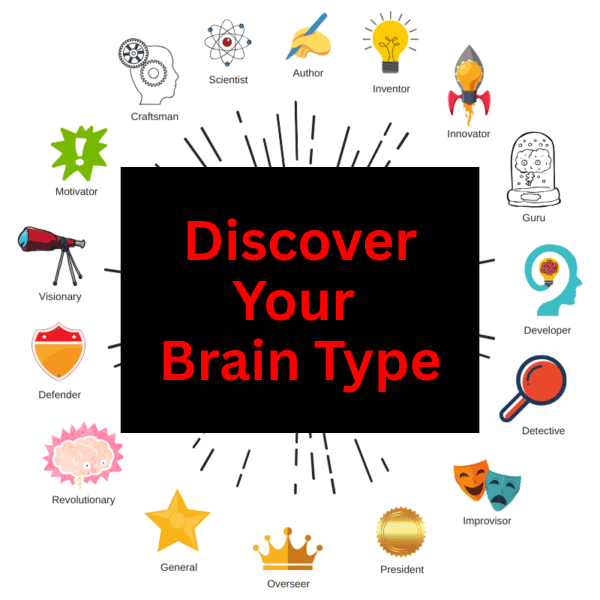
My Brain Type Test is a 20-question quiz designed to identify your “mind type” rather than your “brain type,” but since most people don’t understand this distinction, it’s called the Brain Type Test (braintype.me). It is designed to rewire your brain and train your mind to think, act, and live like a fit and healthy person, so your goals become easier to achieve and become much more permanent as you learn how to change your brain and your mind with custom “rewiring” and behavioral techniques, based on your brain (and mind) type.
If this sparked something, grab Egnor’s book or Penfield’s reflections—your mind’s hungry for more. This post merely scratches the surface,and introduces the concept, so for a deeper dive and a deeper understanding, see the video below:
Latest Posts