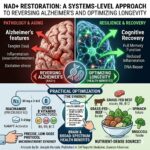
Recent breakthroughs in metabolic research are reframing Alzheimer’s disease. Rather than a mysterious buildup of toxic debris, new evidence suggests the condition is driven by a systems-level energy failure. At the center of this failure is the depletion of nicotinamide adenine dinucleotide (NAD+), a coenzyme essential for mitochondrial function, DNA repair, and cellular resilience.
The Science of Cognitive Reversal
Emerging animal studies published in Cell Reports Medicine and Science Advances demonstrate that restoring NAD+ levels can do more than just slow decline; it may actually reverse advanced pathological features.
-
Restoring Neuronal Instructions: NAD+ regulates RNA splicing through a protein called EVA1C. This process ensures hippocampal neurons “edit” genetic instructions correctly to build the proteins required for memory and learning.
-
Targeting Upstream Failure: By addressing the energy deficit, researchers observed a reduction in tau tangles, neuroinflammation, and oxidative stress. This suggests that amyloid and tau accumulation are downstream symptoms of a deeper metabolic crisis.
-
Biomarker Improvement: Restoring NAD+ balance lowered levels of phosphorylated tau 217, a key clinical biomarker used to track the severity of the disease.
Broad-Spectrum Health Benefits of NAD+
While the neurological findings are profound, maintaining high NAD+ levels is a cornerstone of overall biological age reduction and physical performance.
-
Metabolic Health and Insulin Sensitivity: Adequate NAD+ is required for SIRT1 activation, which improves glucose metabolism and helps prevent the onset of type 2 diabetes.
-
Sarcopenia and Muscle Retention: Declining NAD+ is a primary driver of age-related muscle wasting. Restoring levels supports mitochondrial biogenesis in muscle tissue, maintaining strength and tone without requiring excessive bulk.
-
DNA Repair and Genomic Stability: NAD+ is the fuel for PARP enzymes, which identify and repair damaged DNA strands caused by environmental toxins and oxidative stress, a critical mechanism for slowing the aging process.
-
Cardiovascular Integrity: Optimized NAD+ levels support the health of the endothelium (the lining of blood vessels) and improve the heart’s ability to produce ATP under stress.
Practical Strategies for NAD+ Support
Optimizing NAD+ requires a precision-based approach to avoid stressing methylation pathways or increasing cardiovascular risk associated with excessive B3 intake.
-
Micro-Dosing Niacinamide: Instead of high-dose boluses, research suggests 50 mg of niacinamide taken three to four times daily. This supports the NAMPT enzyme, which is the primary controller of NAD+ production.
-
The B-Vitamin Matrix: NAD+ function depends on a synergy of B vitamins, particularly riboflavin (B2), B6, folate (B9), and B12.
-
Redox Monitoring: Because NAD+ is unstable and difficult to measure directly, assessing the ratio of metabolic biomarkers—such as lactate to pyruvate and acetoacetate to beta-hydroxybutyrate—provides a more accurate picture of cellular redox status.
Nutrient-Dense Recovery: The NAD+ Support Meal
Fueling the brain and body requires high-quality precursors and co-factors found in whole foods. A simple way to integrate these essential nutrients is through my functional meatball recipe, which combines several key ingredients mentioned in the research:
-
Grass-fed Beef: A potent source of B3 (niacin), B6, and B12, essential for mitochondrial energy production.
-
Spinach and Broccoli: These provide the necessary folate (B9) to support methylation and cellular repair.
By combining high-intensity functional training—like the 21-minute X Gym method—with targeted nutritional strategies, we can optimize the body’s “resilience” model, protecting the brain from energy failure and supporting long-term cognitive and physical health.
References
Latest Posts