Mainstream fitness protocols have long championed prolonged, moderate-intensity aerobic exercise as the gold standard for aging. The cellular data, however, tells a radically different story.
Consider Emma Maria Mazzenga. At almost 93 years old, she holds multiple age-group world records in sprinting. Laboratory analyses of her physiology reveal the mitochondrial function of a 20-year-old and the cardiorespiratory fitness of an athletic woman in her 40s. Furthermore, her neuromuscular junctions—the critical connections between the spinal cord and muscle tissue that typically wither with age—remain exceptionally robust. Mazzenga achieved this not through hours of daily jogging, but through brief, max-effort sprint intervals. Her biological reality forces a paradigm shift: extreme aging is highly malleable, provided the mechanical stimulus is sufficiently intense.
The Exerkine Advantage and Ectodomain Shedding
To understand Mazzenga’s physiological preservation, we must examine the molecular cascades triggered by maximal effort. A recent landmark study on exerkines—signaling proteins and metabolites released into the bloodstream during exercise—quantified the massive discrepancy between intense bursts and prolonged cardio.
Researchers found that a mere three minutes of all-out sprint effort drastically altered nearly 25% of measured circulating proteins. In stark contrast, 90 minutes of moderate continuous cycling altered less than 0.25% of those same proteins.
The mechanism driving this is rapid ectodomain shedding. High-intensity mechanical stress forces cells to immediately cleave off proteins sitting on their surfaces, flooding the bloodstream with signals that command rapid blood vessel growth, tissue remodeling, and the reprogramming of adipose tissue. Cross-referencing these specific sprint-altered proteins with extensive biobank data revealed they are directly linked to a lower risk of metabolic disorders and significantly slower biological aging. Mainstream aerobic volume simply fails to trigger this immediate, systemic survival response.
Frailty as an Underuse Syndrome
The necessity of high mechanical tension is further corroborated by the foundational Boston FICSIT study. This research evaluated chronically institutionalized patients up to 100 years old, definitively proving that age-related physical frailty and lower extremity weakness are not inevitable biological decay. They are symptoms of an “underuse syndrome.”
Reversing this decline requires mechanical resistance. While Mazzenga’s sprinting preserved her mitochondria and slow-twitch fibers, her regimen lacked the targeted resistance necessary to prevent fast-twitch muscle fiber atrophy. To optimize human longevity, a protocol must marry the exerkine release of maximal cardiovascular output with the structural adaptations of progressive resistance training.
The X Gym Methodology: Maximizing the Effective Dose
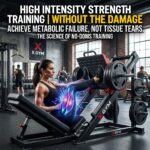
This precise intersection of cellular biology and mechanotransduction is the foundation of the high-intensity functional training methodology utilized at X Gym.
To achieve the mitochondrial density and exerkine signaling of a world-class nonagenarian sprinter, while simultaneously preventing the fast-twitch atrophy identified in frailty studies, we condense the maximum effective dose of exercise into just 21 minutes, performed twice a week.
This time-optimized protocol safely forces high-yield metabolic adaptations. It initiates the rapid ectodomain shedding necessary for systemic biological age reversal and creates dense, defined, and highly functional muscle tissue without the cellular oxidative stress or joint degradation associated with high-volume, mainstream endurance training. Biological age is not a fixed timeline; it is a metabolic state that can be engineered, and X Gym is the perfect place to do this as safely and as quickly as possible!
P.S. Sprint training is easier than you think! Below is my heart rate graph after 7 sprint intervals that took me just 14 minutes – including recovery between my 12-second sprints.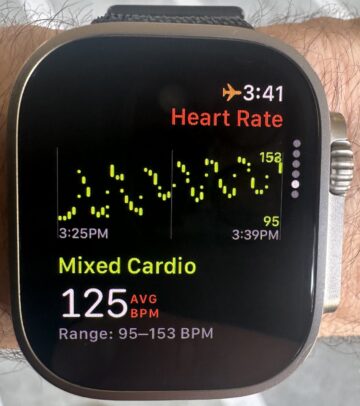
References
Latest Posts